
Sequatchie County Criminal Court Cases
Sequatchie County sits in Tennessee's Twelfth Judicial District. Circuit and Criminal Court is the felony court of record. General Sessions hears misdemeanors and handles the first stages of felony prosecutions, including initial appearances, bond questions, and preliminary proceedings. A felony can begin in Sessions before a grand jury returns an indictment and the matter moves to the court of record. Dunlap City Court is separate. It handles municipal, ordinance, and traffic matters within its authority, not county felony trials.
The Circuit Court Clerk keeps the local file for both the county criminal court and General Sessions. That file is the best source for the filed charge, docket entries, plea or verdict, judgment, sentence, costs, and later revocation or post-judgment orders. The arresting agency's report and the jail booking record serve different purposes. They may show the allegation and custody event, but they do not replace the court's final disposition.
The Tennessee AOC courthouse directory helps readers confirm the proper court location.
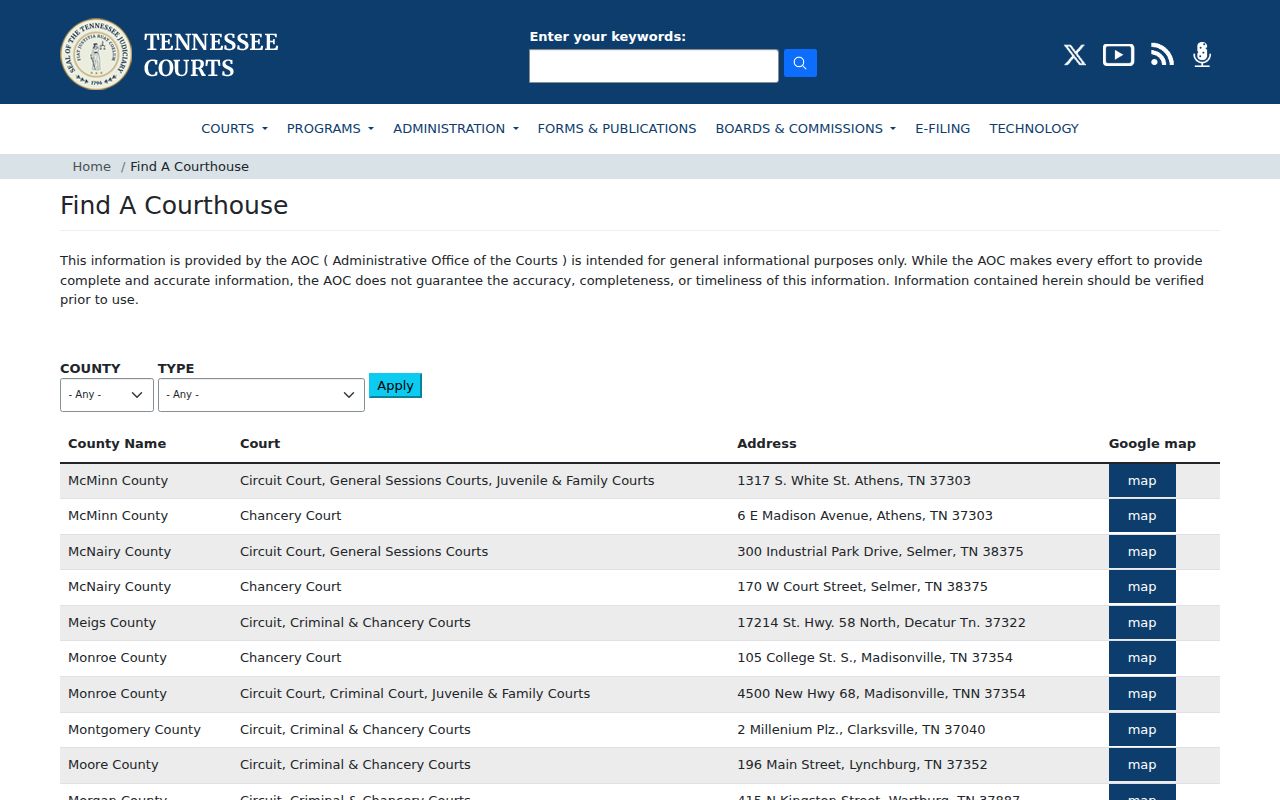
That directory is a routing tool, while the filed Sequatchie County case record remains with the local clerk.
Which Sequatchie County Court Holds It?
Start with the level and origin of the charge. County misdemeanor cases and preliminary felony work point to General Sessions. Indictments, felony pleas, trials, sentencing, and post-judgment matters point to Circuit or Criminal Court. A city citation may instead belong at Dunlap City Court. An appeal from a criminal judgment goes to the Tennessee Court of Criminal Appeals, where a separate online history can become available.
Do not infer the assigned judge from a directory. The AOC lists judges who serve the six-county district, but the docket identifies the judge for a specific Sequatchie County criminal case. The same caution applies to case status. A Sessions dismissal, grand-jury no-bill, acquittal, and appellate reversal are distinct events. Each must be read from its own filed entry or order.
Searching Sequatchie County Case Records
No official public Sequatchie County trial-court search portal was verified. A sound local search is clerk-assisted, with the Tennessee appellate Public Case History used only when an appeal exists. Searchers should separate county, city, and appellate channels before asking for documents.
- Decide whether the matter is in General Sessions, Circuit or Criminal Court, Dunlap City Court, or an appellate court.
- Give the Circuit Court Clerk the full name, spelling variants, approximate year, and case number if known. Ask for both Sessions and Circuit or Criminal results.
- Request the case number and docket summary, then confirm identity with lawful identifiers rather than a common name alone.
- Ask for the charging paper, bond and appearance orders, motions, plea or verdict, judgment, sentence, and final disposition.
- Confirm copy delivery, certification, cost, payment, and archive-search terms with the clerk. If appealed, search the state appellate system.
Note: No local copy fee or turnaround schedule was published, so confirm current terms before authorizing a search or certified copy.
Sequatchie County Criminal Clerk Counter
Karen L. Millsaps is the clerk of record. The official Sequatchie County directory places the criminal counter at the Sequatchie County Justice Center, 351 Fredonia Road, Suite B, Dunlap, TN 37327. The published phone is (423) 949-2618, and the AOC lists karen.millsaps@tncourts.gov. Suite B matters because the Sheriff's Office is in Suite A. A request for pleadings, a judgment, or a certified disposition belongs with the clerk, not the sheriff's booking custodian.
Sequatchie County Circuit Court Clerk
351 Fredonia Road, Suite B
Dunlap, TN 37327
(423) 949-2618
karen.millsaps@tncourts.gov
The county clerk profile summarizes the office's local duties and contact route.
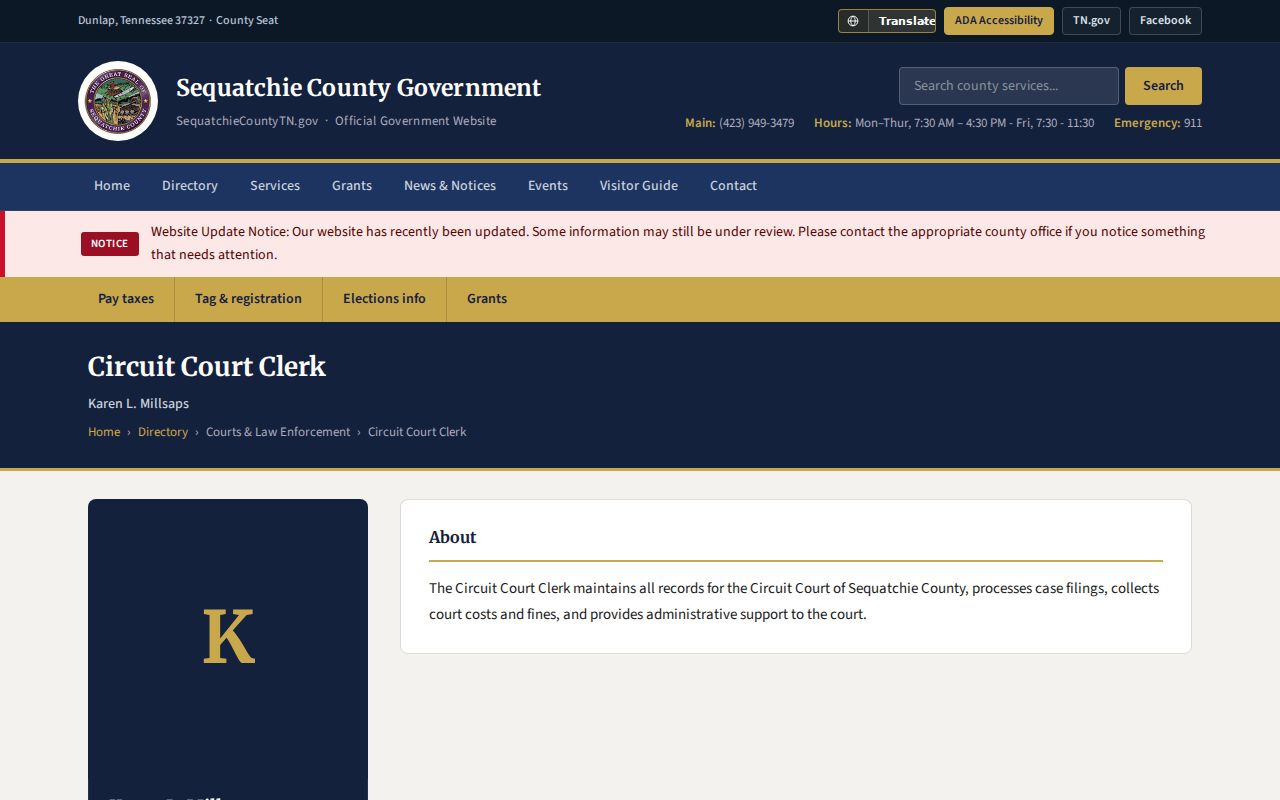
The profile confirms where a local criminal case request should begin when no public trial-court portal is available.
The AOC clerk listing provides another official check on the Sequatchie County clerk contact.
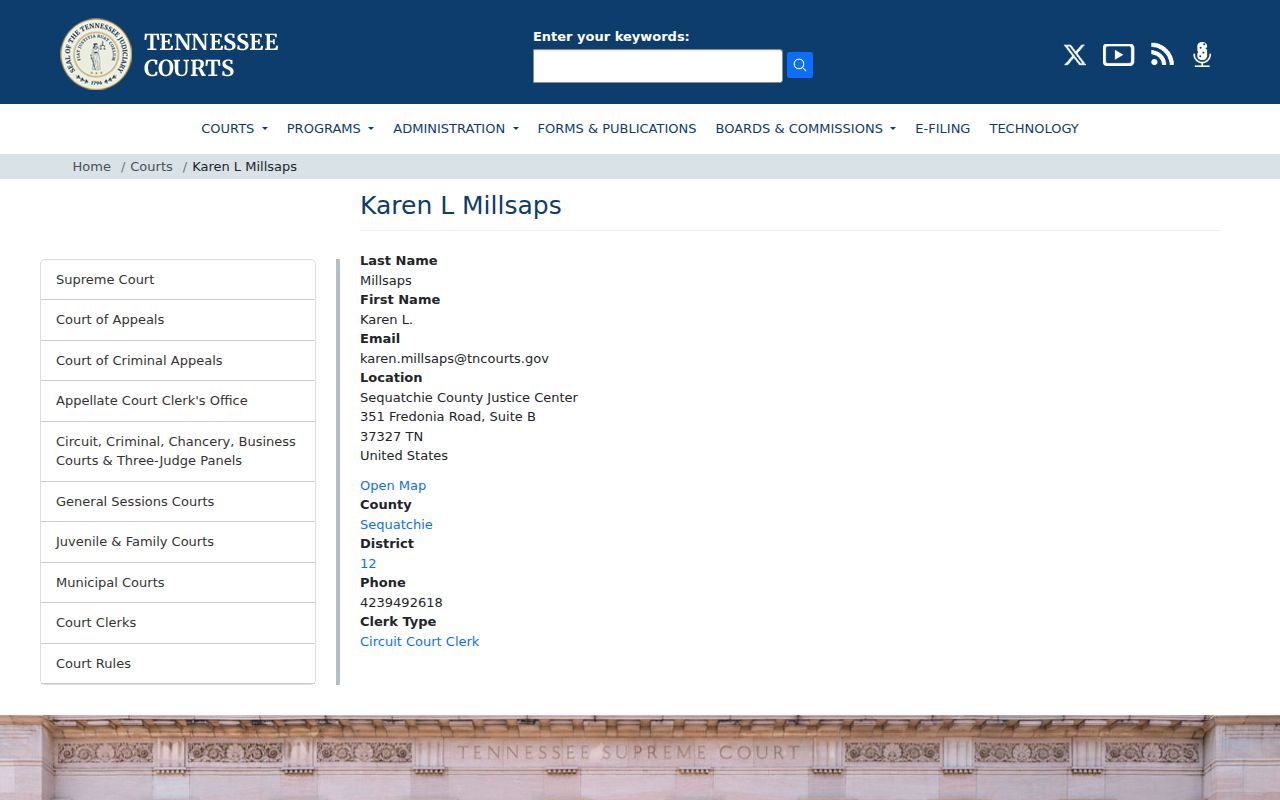
Using both official listings helps route a request without relying on an unofficial case-search vendor.
Inside a Sequatchie County Case File
A case file follows the prosecution, not just the arrest. The charging paper shows what the State actually filed. The docket records hearings and filings. Orders show what the judge decided, while the judgment and sentence answer how each count ended. Financial records can divide fines, clerk costs, litigation tax, restitution, and payments into separate fields. A current balance should be confirmed with the clerk.
| Case Number and Court | Identifies the local file and whether General Sessions or Circuit or Criminal Court controls it. |
|---|---|
| Charging Document | May be a complaint, indictment, presentment, or another lawful charging paper. |
| Docket Entries | Chronological filings, hearings, motions, appearances, and orders. |
| Hearing Dates | Scheduled and completed settings, which should be checked for later changes. |
| Disposition and Judgment | Dismissal, nolle prosequi, acquittal, plea, verdict, or other charge-level result. |
| Sentence and Conditions | Confinement, probation, fines, costs, restitution, and concurrent or consecutive terms when imposed. |
Charges may change from arrest through judgment. A careful account preserves each stage and gives the signed judgment priority when stating the outcome.
Sequatchie County Appellate Case Search
Tennessee's Public Case History system is free and does not require a login, but its scope is appellate. It cannot establish that no local trial case exists. Search it after finding an appeal number or when a county judgment appears to have been reviewed. Linked appellate documents are usually PDFs, and the record can show the originating county, trial judge, case milestones, panel, decision, and appellate disposition.
| Field Label | Type | Required | Format Notes |
|---|---|---|---|
| Case Number | Text | Unspecified | Full appellate number or supported sequence search. |
| Case Style | Text | Unspecified | Full or partial caption. |
| Party Name | Text | Unspecified | First or last name. |
| Business/Organization | Text | Unspecified | Organization party name. |
An appellate result can expose more than the search form. Its record view may identify the originating trial court, trial number and judge, parties and counsel, milestones, panel, decision date and type, disposition, record-file events, document descriptions, and linked opinions or orders.
| Case Identity | Appellate docket number, case style, court, and originating Sequatchie County trial number. |
|---|---|
| People and Roles | Parties, counsel, trial judge, and appellate panel when listed. |
| Milestones | Filed events, descriptions, dates, and record transmission information. |
| Decision | Decision date and type, disposition, and linked PDF documents. |
The Tennessee appellate Public Case History search displays the inspected fields.
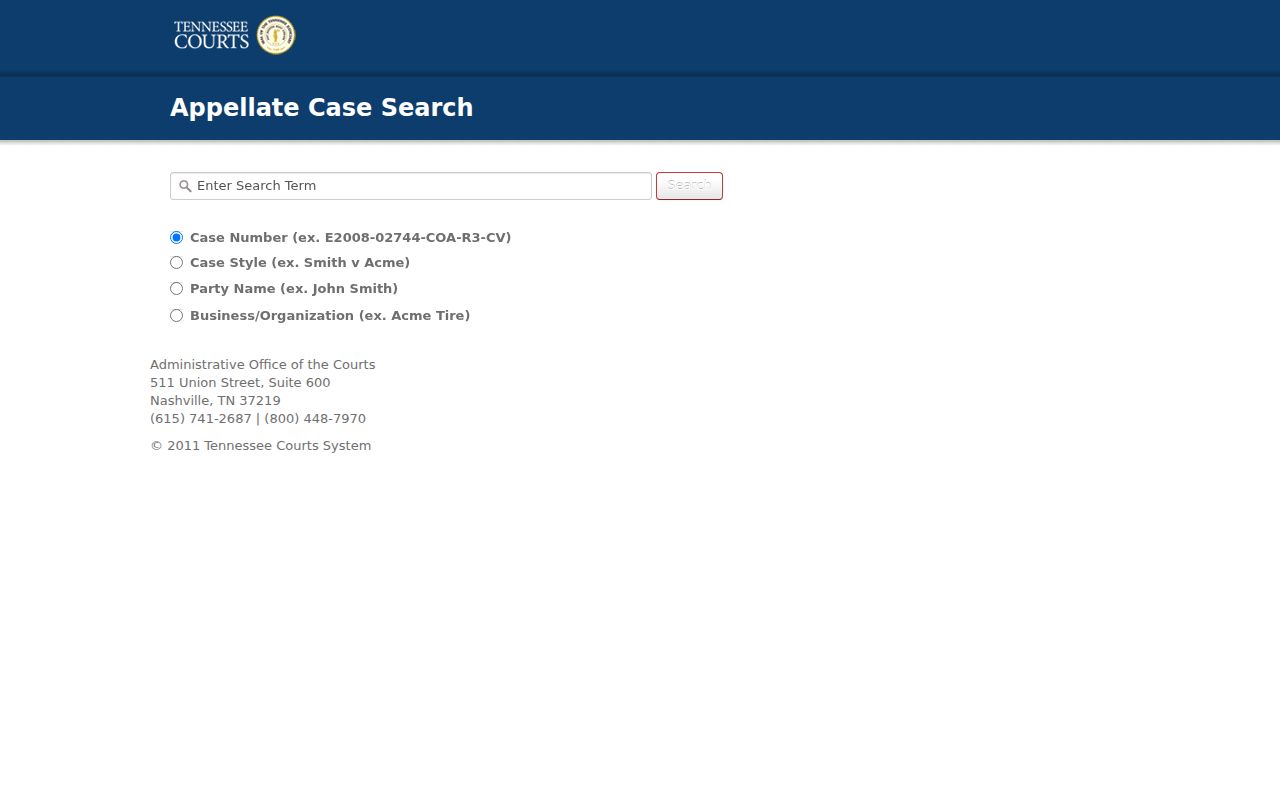
The search image shows why a party name or appellate case number is useful, while local trial files still require clerk contact.
How a Criminal Case Moves
A Sequatchie County prosecution may start with an arrest or summons, followed by a complaint, first appearance, and probable-cause work. A felony can then move through grand-jury action, arraignment, discovery, motions, plea talks or trial, judgment, sentencing, and possible appeal. Not every case uses every stage. The file should show which steps actually occurred.
Case flow: Charges Filed › Arraignment › Pretrial › Plea or Trial › Disposition › Sentencing
Terms need context. Nolle prosequi means the prosecution formally chose not to continue a charge at that point. A no-bill means the grand jury did not indict. Dismissal ends a charge but should be read with the order and reason. A not-guilty verdict is an acquittal. Diversion may lead to dismissal and possible expungement only after all terms are met and the court enters the needed order.
When Sequatchie County Cases Are Offline
An empty web search does not prove an empty courthouse file. Sequatchie County has no verified public trial-court name-search interface, and older material may require an archive search. Give the clerk a narrow year range and any case, warrant, or booking number. Ask first for a docket summary. It can reveal which documents are worth copying and whether the matter moved between General Sessions and the court of record.
Certified and plain copies serve different needs. A screen view is useful for locating a case. A clerk-certified judgment or disposition authenticates the filed record. Ask which pages can be emailed, which require pickup or inspection, and what the current charges are. Do not borrow another Tennessee county's fee schedule.
Case Record Access and Restrictions
Tennessee Supreme Court Rule 34 provides the judicial-record access framework. Filed case records are generally open unless a statute, sealing order, or recognized court rule protects them. Judicial drafts, judges' working notes, and protected records are not ordinary public case-file material. Juvenile law-enforcement records face separate limits under state law.
Expect redaction of Social Security numbers, bank information, protected victim details, and identifying data about minors. A court may also seal or restrict a document. Ask for the public portion rather than assuming one protected field closes the whole file. For a case that cannot be found, confirm the court, name spelling, year, and archive status with the clerk.
Correcting Sequatchie County Court Records
A Tennessee Bureau of Investigation history and a Sequatchie County judgment can disagree because arrest and disposition reports travel through different systems. Missing identifiers can prevent a disposition from linking to an arrest cycle. Start by obtaining the local certified disposition. Then ask the originating clerk to confirm what it reported and use TBI's dispute process for the repository entry.
Fingerprint comparison can help resolve a name match in the state system. The Tennessee Applicant Processing Services appointment gateway is the state's IdentoGO entry point for authorized fingerprint services.
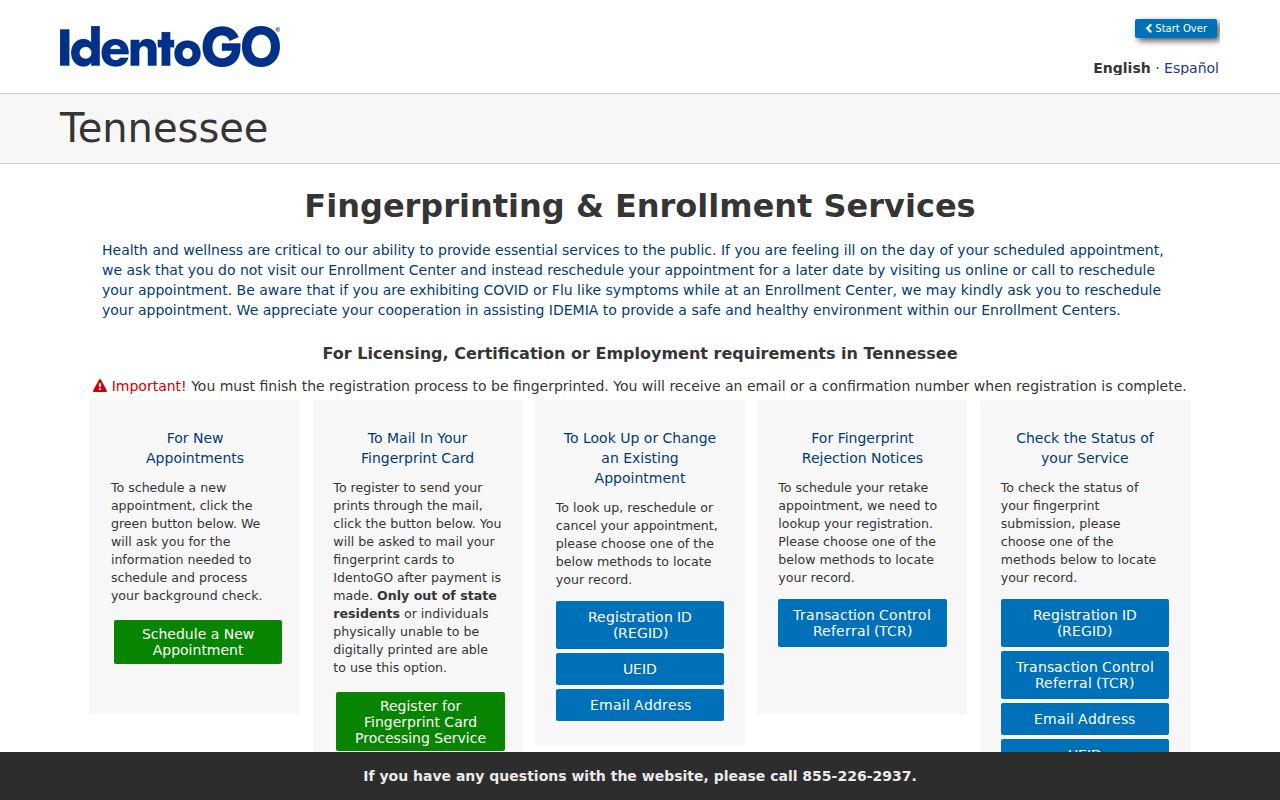
The fingerprint channel does not replace the court file; it helps distinguish identity while the certified Sequatchie County order proves the local outcome.