
Sequatchie Criminal Records Crossroads
Most local record work leads to one address, but not one counter. The Sequatchie County Justice Center at 351 Fredonia Road places the Sheriff's Office in Suite A and the Circuit Court Clerk in Suite B. The first holds sheriff reports, jail intake records, and custody information. The second keeps Circuit, Criminal, and General Sessions case files. That close setup helps, yet it can also cause a common error: a booking sheet and a court judgment are not two versions of the same record.
The current county and individual Circuit Court Clerk listing point record seekers to Fredonia Road. A broader state courthouse directory still lists 22 Cherry Street for Circuit, Criminal, and Chancery courts. Confirm the building for a hearing or file before leaving home. The current clerk listing is the better office-specific source for criminal records, while Cherry Street remains a county government and Chancery location.
The official Sequatchie County homepage shows the county service hub.
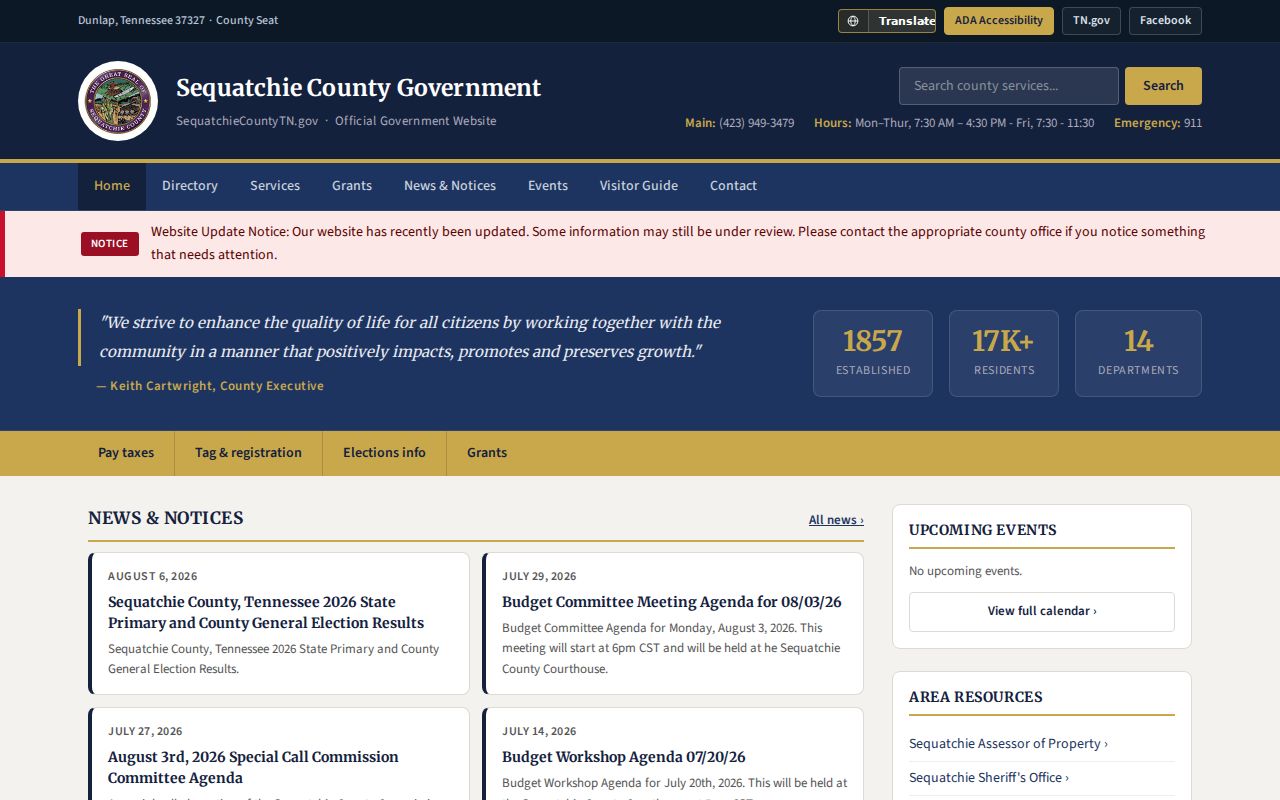
Its office links help route a request, but they do not provide a countywide criminal-record search.
Checking Criminal History in Sequatchie County
A full local check starts with the question the record must answer. Use the clerk for charges filed in court, docket events, judgments, and dispositions. Use the sheriff or Dunlap Police for the report created by the arresting agency. Use TBI for a Tennessee repository history. Appeals require a separate state appellate search. No verified county trial-court name portal combines those layers.
Collect the full legal name, known spellings, approximate event year, report or case number, and the agency involved. A date of birth can help an official distinguish common names, but share sensitive data only through the office's approved channel. Then follow this Sequatchie County criminal-record workflow:
- Call the Circuit Court Clerk at (423) 949-2618 and ask for both General Sessions and Circuit or Criminal Court files.
- Request the docket summary, charging paper, judgment, sentence, and final disposition for the right case.
- Contact the arresting agency for its incident or arrest report and the sheriff for any county booking record.
- Compare the local outcome with a TBI record when statewide Tennessee history is needed.
- Search Tennessee Public Case History only if the case was appealed, since it does not cover all trial cases.
- Ask the correct custodian for inspection, copies, certification, current fees, and delivery choices.
According to the official Sequatchie County directory, the sheriff and clerk occupy separate suites at the Justice Center.
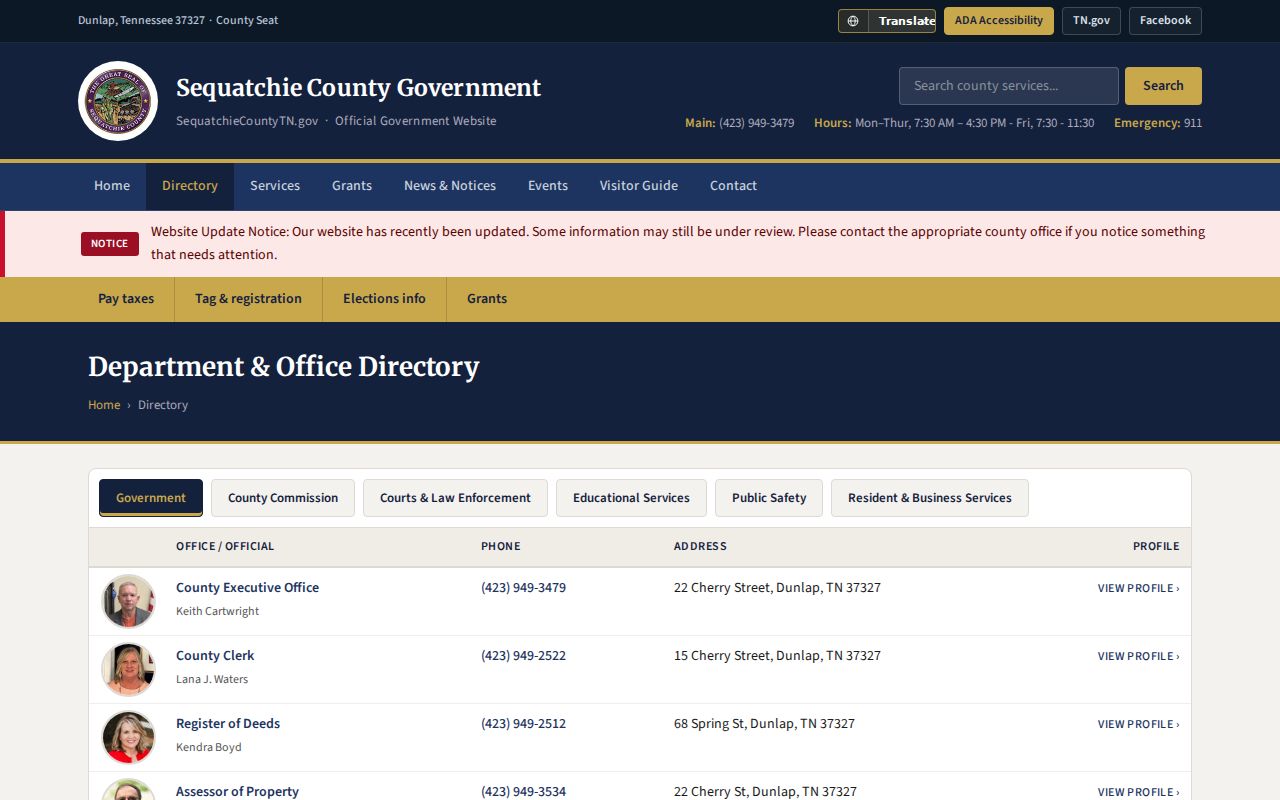
The directory view makes the local custody and court channels easy to distinguish before a call or visit.
Tennessee Official Background Checks
The Tennessee Bureau of Investigation, Criminal Justice Information Services Division, maintains the state repository. Its public product is Tennessee Open Records Information Services, or TORIS. Any requester may order a Tennessee-only name search for a named adult. The nonrefundable charge is $29 per subject. TBI builds the reported history from fingerprints submitted for qualifying misdemeanor and felony arrests, then links outcomes sent by clerks and agencies.
TORIS is not fingerprint confirmation. It does not search aliases, and it omits juvenile information unless the youth was transferred for adult prosecution under state law. It also does not supply a national record. For one's own national fingerprint record, the FBI Identity History Summary is the official route. Tennessee Applicant Processing Services and IdentoGO handle fingerprint collection when an authorized program provides a service code. Those program checks are not an open public search product.
| Official channel | Scope | Published cost | Main limit |
|---|---|---|---|
| TORIS web or mail | Tennessee name-based history | $29 | Possible name match; Tennessee only |
| TBI fingerprint comparison | Dispute a TORIS identity match | $24 | Fingerprint card and written dispute required |
| TAPS / IdentoGO | Authorized TBI or FBI purpose | Program-specific | Agency service code required |
| FBI direct summary | Subject's own national FBI history | $18 | Fingerprints required |
Sequatchie TORIS Record Search
TORIS begins with requester details before the subject search. Use a desktop or laptop to save and read the result PDF. Accuracy matters because the search relies on the data entered. A possible match should be checked against a Sequatchie County court disposition, especially when names are common or a local charge changed after arrest.
| Requester field | Status | Format note |
|---|---|---|
| First and last name | Mandatory | Requester information |
| Middle initial | Optional | One initial |
| Street, city, state, ZIP | Mandatory, except address line two | Mailing address |
| Phone | Mandatory | Requester contact |
| Email and confirmation | Mandatory | Result notice is sent here |
The official TORIS start screen displays its search choices and fee notice.
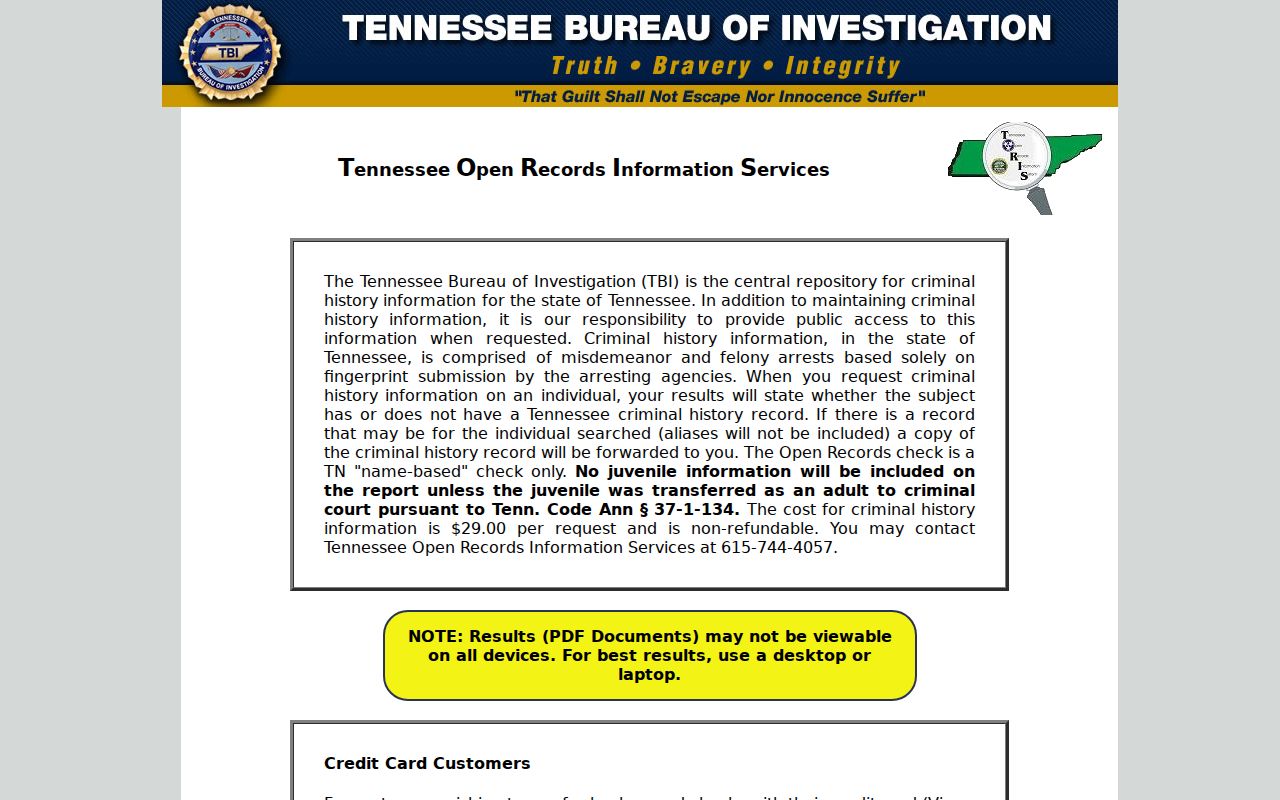
The screen is the state repository entry point, not a substitute for the deeper case file held in Sequatchie County.
Note: A TORIS no-record result does not rule out federal, out-of-state, non-fingerprinted, juvenile, expunged, or unlinked local events.
Criminal Record Types
Criminal history is a group of records, not one document. In Sequatchie County, the producing office determines both content and access. The arresting agency writes the incident or arrest report. The jail creates an intake and custody record. Prosecutors decide what charges to pursue, and the clerk logs the filed case. TBI receives fingerprint and disposition reports, while TDOC maintains felony custody and supervision data.
- Arrest and booking records show the allegation, agency, intake, bond, and release or transfer information available at that stage.
- Court case files show filed charges, hearings, pleas, judgment, sentence, costs, and final disposition.
- Warrants and capias records arise from a judge or court and may show issue, service, bond, recall, or case status.
- Repository history links Tennessee fingerprint-reported arrest cycles to outcomes supplied to TBI.
- Custody and supervision records divide between the county jail, TDOC FOIL, probation, and parole authorities.
- Registry records form a separate statutory public-safety system managed by TBI with local sheriff verification.
A police report does not prove a conviction. A booking charge can change before a prosecutor files a case. Likewise, a court judgment can later be affected by appeal or expungement. Match the record to the question and favor the final court order when determining how a Sequatchie County prosecution ended.
Sequatchie Jail and Warrant Records
No verified official county jail roster, daily arrest blotter, or public warrant-name search was found. That online gap is not proof that no record exists. For present county custody, call the Justice Center at (423) 949-7750 and choose option 1 for inmate inquiries. Ask whether the person is held, released, or transferred, and which agency made the arrest. Option 2 routes sheriff business and records questions.
An active warrant needs two checks. Ask the Sheriff's Office what it can confirm, then contact the issuing court or Circuit Court Clerk for the case number, warrant or capias status, bond information, and any recall order. Dunlap municipal matters begin with the Dunlap Police and City Court number, (423) 949-3319. Never treat FOIL, TORIS, or silence on a website as a full warrant clearance.
After a felony transfer or during state supervision, TDOC's Felony Offender Information Lookup may show status, location, offense, sentence, parole fields, and an eight-digit TOMIS identifier. FOIL covers current and former felony custody or supervision. It is not a list of recent Sequatchie County jail bookings. VINE can supply notifications where participating custody data are available, but the originating jail remains the best source for its booking file.
Note: Confirm a warrant through official numbers; gift cards, cryptocurrency, retail kiosks, and caller-directed wires are not valid warrant-payment channels.
Sequatchie Supervision and Registry Records
Probation and parole describe different forms of community supervision. A Sequatchie County court judgment states whether probation was imposed and lists the sentence as entered. TDOC Field Services supervises state felony probationers and parolees through District 30, while the Tennessee Board of Parole handles release decisions. FOIL may display public felony status and sentence fields, but it does not expose each case note or every local misdemeanor supervision file. The judgment remains the source for the terms the court imposed.
The Tennessee Sexual Offender Registry is a separate disclosure system, not part of TORIS or FOIL. TBI runs the state search, and the Sequatchie County Sheriff's Office performs local registration and verification. Search by name or place, check the displayed update date, and report a suspected error to the registering agency rather than contacting the person. The dedicated Sequatchie County sex offender search explains profile fields, Tennessee reporting categories, NSOPW, and the law against threats or harassment.
Inside a Sequatchie County Criminal Record
The fields depend on the custodian. A TBI record is organized around identity and fingerprint-supported arrest cycles. A clerk file gives more detail about pleadings, hearings, judgment, and money owed. A booking file focuses on intake, bond, property, and immediate custody. Protected data such as Social Security numbers, financial accounts, victim details, and identifying information about minors may be redacted.
| Name and identifiers | Legal name, known descriptors, local case or booking number, TBI number, or TDOC TOMIS ID where applicable. |
|---|---|
| Arrest and booking | Agency, date, alleged offenses, warrant basis, intake, bond, and release or transfer details. |
| Charges and statutes | Arrest allegations, complaint or indictment counts, and Tennessee Code citations at each stage. |
| Disposition | Dismissal, nolle prosequi, no-bill, plea, acquittal, conviction, diversion, or another recorded result. |
| Sentence | Confinement, probation, fines, costs, restitution, and concurrent or consecutive terms. |
| Custody or supervision | County hold, TDOC status, location, probation, parole, release, or inactive status when public. |
Read each date and status in context. A charge is the offense alleged. A disposition is the outcome of that charge. A capias is court process directing custody, often after failure to appear. Judicial diversion delays a final judgment under set terms and may lead to dismissal and expungement after successful completion, but the signed final order controls.
Correcting Sequatchie Criminal Record Gaps
A repository report may show an arrest without the expected result because the court disposition has not been linked, identifiers were incomplete, or the case data reached a different system. First obtain the Sequatchie County docket and final order. Compare names, dates, charges, and case numbers. Ask the clerk to correct its own file if the source record is wrong, or use the certified order when another agency has not updated its display.
If the questioned TORIS entry may belong to someone else, TBI provides a fingerprint-comparison process. The person submits law-enforcement fingerprints, a dispute letter, and a $24 cashier's check or money order to the TORIS Unit. TBI then determines whether the history matches. That process addresses identity or accuracy. It does not expunge a correct event. A correct but eligible Sequatchie County charge must go through the court where the case ended.
- Dismissal
- A charge ends without a conviction on that count.
- Nolle prosequi
- The State records its decision not to continue the charge under court procedure.
- No-bill
- The grand jury declines to return an indictment.
- Acquittal
- A court or jury returns a not-guilty result after trial.
- Disposition
- The recorded outcome for a charge or case.
Public Access Laws in Tennessee
Access turns on the kind of record and its custodian. The Tennessee Public Records Act generally presumes state and local records open to Tennessee citizens unless another law makes them confidential. Tennessee Supreme Court Rule 34 governs judicial records. An office may redact protected fields from an otherwise public record, and it need not create a new report or answer open-ended questions in place of producing existing records.
Key authorities:
Tenn. Code Ann. § 10-7-503 sets the main public-access rule for state and local records.
Tenn. Code Ann. § 10-7-504 identifies confidential information that must be withheld or redacted.
Tennessee Supreme Court Rule 34 governs access to court records and recognizes sealed and confidential material.
Tenn. Code Ann. § 40-32-101 controls expungement of qualifying Tennessee charges and convictions.
Tenn. Code Ann. § 37-1-153 restricts juvenile law-enforcement record access.
Active investigative material, sealed documents, juvenile records, protected victim information, and court-ordered restrictions can narrow release. A denial should identify its legal basis. When a releasable part can be separated, ask the custodian whether a redacted copy can be produced.
Sequatchie Public Record Request Route
The Tennessee Public Records Act is a right of access, not a central criminal-history office. Send the request to the agency that made or keeps the record. A sheriff report goes to the Sheriff's Office. A Dunlap Police report stays with Dunlap Police. A filed case goes to the Circuit Court Clerk. For an E-911 call or dispatch record, start with Sequatchie County E-911 and identify the narrow date and time range.
Describe an existing item. Include the incident, booking, warrant, citation, or case number if known; the subject name; date and place; producing agency; and whether inspection, an electronic copy, paper copy, or certification is sought. Ask about citizenship or identification rules, redaction, costs, payment, delivery, and timing before authorizing copies. No local sheriff fee schedule or turnaround promise was published, so do not borrow a price from another Tennessee county.
The Tennessee Comptroller's public-records FAQ explains custodian routing and request scope.
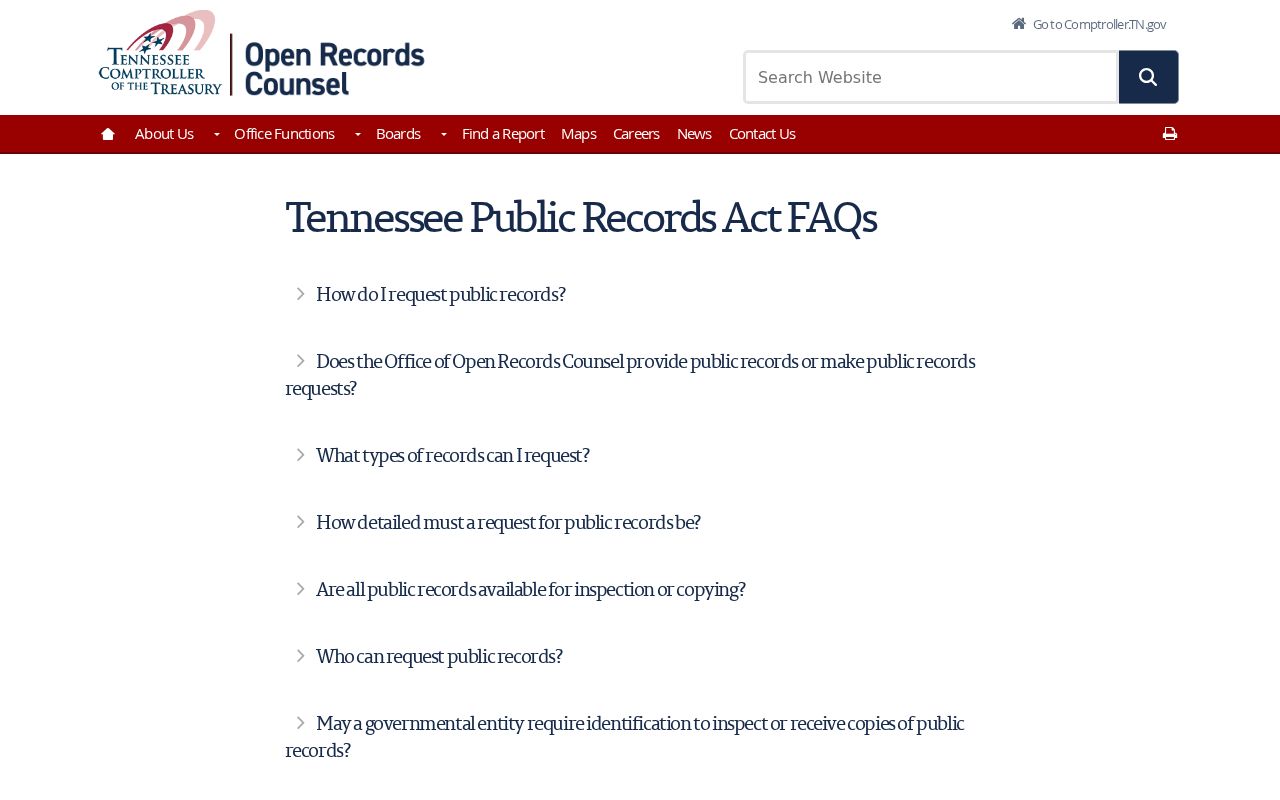
The state guidance is the best official fallback when Sequatchie County has no dedicated online request form.
Sealed, Expunged, and Restricted Records
Tennessee's main adult clearing remedy is expungement. Juvenile law-enforcement and court material is generally confidential, and TORIS omits juvenile information unless the youth was transferred for adult prosecution. Other restrictions can cover victim details, personal identifiers, sealed matters, and active investigations. Expungement is different from redaction: redaction hides protected fields in a public copy, while a valid expungement order directs removal of an eligible charge from ordinary public records.
Begin a Sequatchie County expungement review with the Circuit Court Clerk and the exact case number. Obtain the docket and final disposition, compare every count with current § 40-32-101 rules, and ask for the current form and cost statement. Eligible non-conviction outcomes can include dismissal, acquittal, and no-bill. Certain completed diversions and a limited list of convictions may also qualify. Eligibility is charge-specific, and no Sequatchie-specific online filing portal or local fee table was verified.
For an eligible conviction, the general wait is measured from completion of the whole sentence, including confinement, supervision, fines, costs, and restitution. The petition goes to the court where the conviction occurred. After a signed order, the clerk, arresting agency, jail, TDOC, TBI, and FBI may each have a processing role. TBI states that it deletes covered charges and related fingerprint material rather than merely hiding a public result. Keep a certified copy and recheck the local and state records after processing.
Sequatchie Crime Records by Year
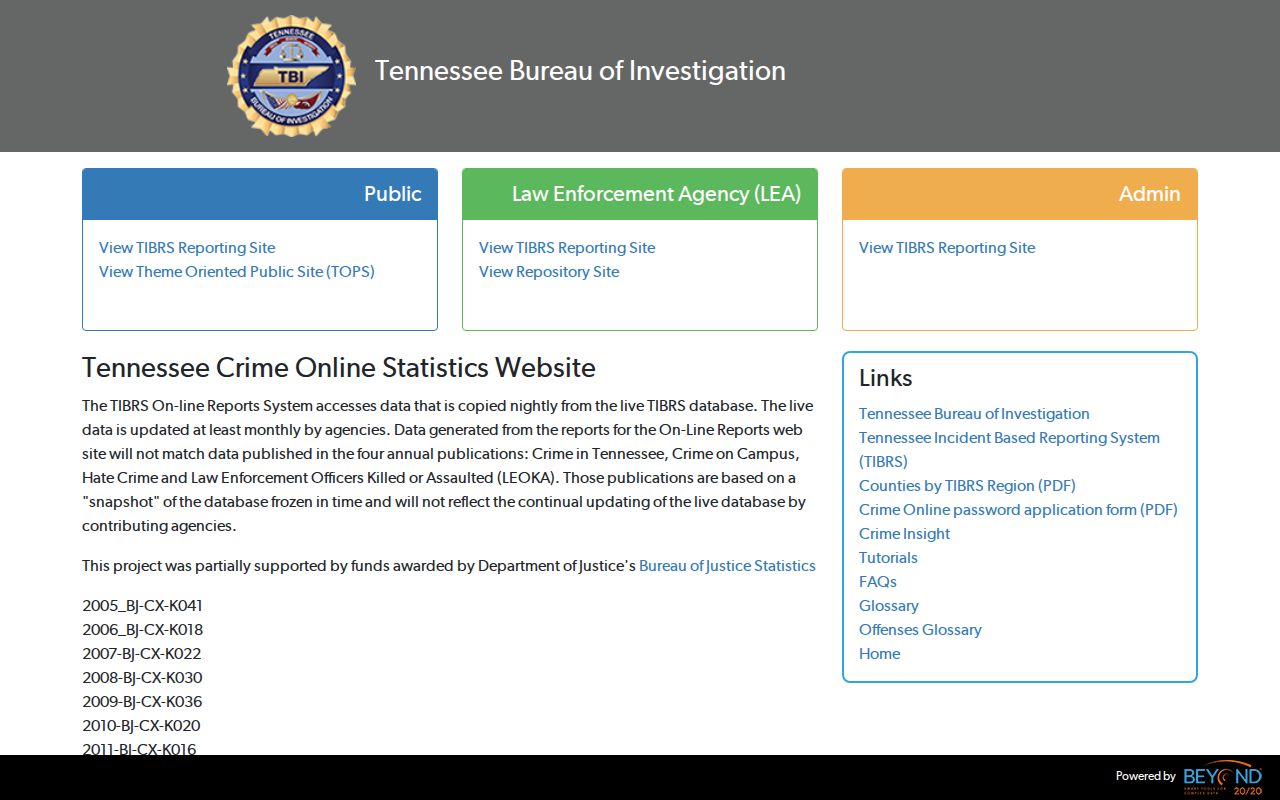
County crime totals require a source year and agency filter. TBI CrimeInsight is the official state dashboard for reported offense data. A figure for Dunlap Police is not automatically a countywide count, and small-agency reporting changes can distort comparisons across years. The 2024 TDOC Statistical Abstract listed four locally sentenced felons for Sequatchie County, but that narrow measure is not jail capacity, total bookings, or average daily population.
The official TBI CrimeInsight dashboard lets readers choose an agency and reporting period.
Print or save the selected year with any number so the statistic keeps its proper scope.
Sequatchie Federal Criminal Records
Federal records sit outside the county and TBI layers. Sequatchie County is in the Eastern District of Tennessee, Chattanooga Division. Federal criminal dockets use PACER, while federal custody uses the Bureau of Prisons locator. A county clerk search will not return every federal case, and a TORIS check is Tennessee-only.
The official PACER service is the federal court account and docket-search channel.
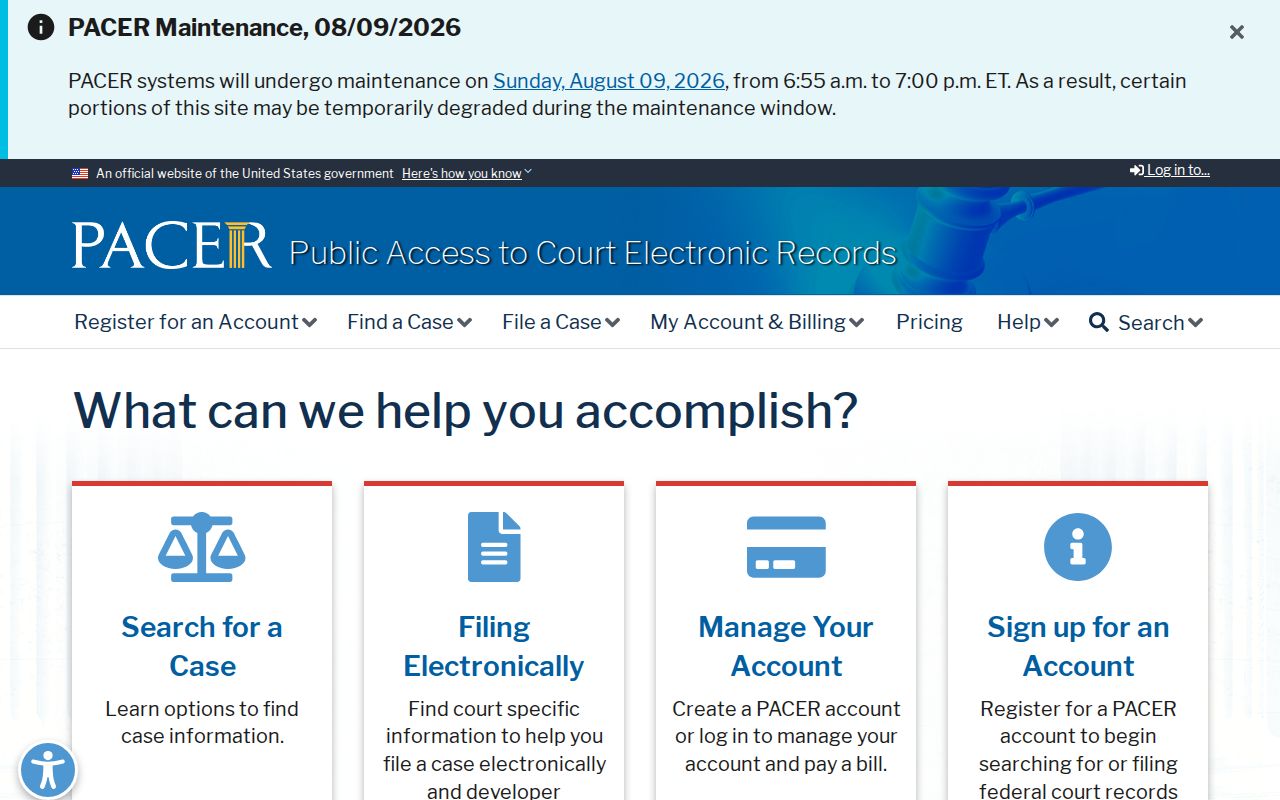
PACER registration and federal fees are separate from Sequatchie County court-copy procedures.
Sequatchie County Criminal Records by City
Dunlap is Sequatchie County's only incorporated municipality, so one city record guide is correct. A Dunlap Police event can create a city incident report, a county jail booking, a General Sessions or Circuit case, and a TBI arrest cycle. City Court handles municipal and traffic matters within its lawful jurisdiction, while county courts handle state criminal cases. Ask which agency wrote the report before choosing a counter, especially on state routes or in places with a Dunlap mailing address outside city jurisdiction.
Dunlap Criminal Records
Only incorporated city · Police and City Court records begin at 119 Church Street.
Dunlap's city court and police building is distinct from City Hall and from the county Justice Center on Fredonia Road. No official city report form or online municipal case search was located. Call (423) 949-3319 for the city record, then use the county sheriff or clerk when the event moved into custody or a state prosecution.